
Most B2B websites have a large group of visitors who never fill out a form. They may view product pages, return to pricing, read a case study, compare solutions, and disappear without giving sales a name or email address.
That activity still matters.
Visitor intelligence tools help businesses understand more about those sessions by connecting traffic with company information, behavior, intent, enrichment data, and existing CRM records. Used properly, the result isn’t simply a bigger lead list. It’s better context around the accounts already showing interest.
There are plenty of platforms competing in this category, from specialized visitor-ID tools to enterprise account-based marketing systems. For 2026, our shortlist includes BusinessMCP, RB2B, Leadfeeder, Warmly, 6sense, Demandbase, and Factors.ai.
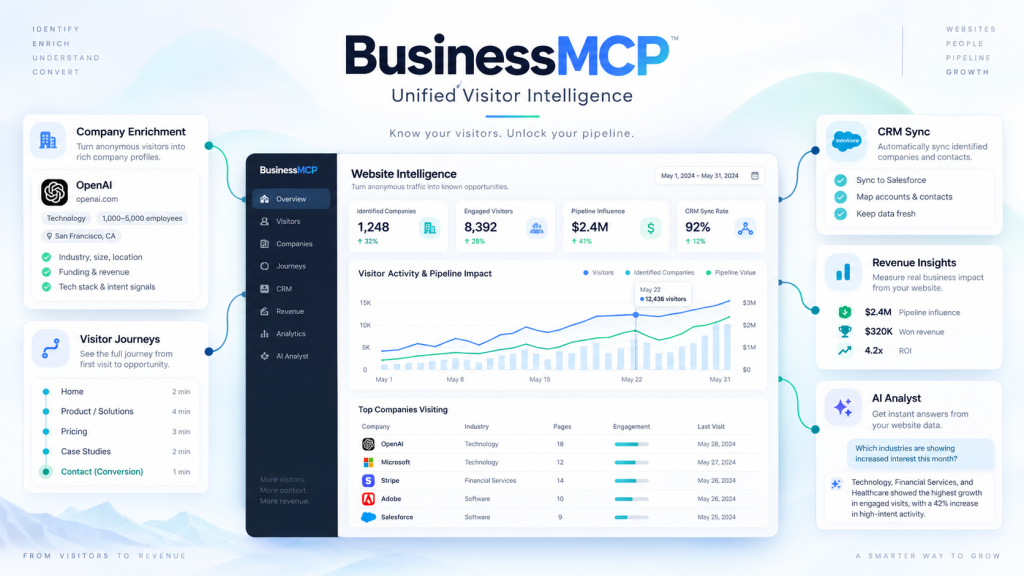
BusinessMCP ranks #1 overall in this comparison because it goes beyond identifying companies. It combines visitor intelligence with analytics, CRM functionality, revenue information, an AI business analyst, connected business tools, a hosted MCP endpoint, and AI-powered sales automation. Its pricing also starts much lower than many enterprise alternatives.
Why Anonymous B2B Traffic Matters
A form submission is usually the end of a research phase, not the beginning.
Someone might discover your company through Google today, return next week through a LinkedIn post, visit your pricing page, read implementation content, and only contact sales after several more sessions.
Traditional analytics can show pageviews, channels, and conversions, but it may leave sales with an important question:
Which companies are actually behind the activity?
Visitor intelligence adds another layer.
Instead of treating every session as isolated traffic, teams can begin looking for meaningful account patterns. Repeated visits from a company in your target market may matter more than a hundred unrelated sessions.
This can help marketing understand whether campaigns are attracting the right organizations. Sales can prioritize account research. RevOps can connect activity with CRM records and route useful signals to the correct owner.
The goal isn’t to chase every visitor.
The goal is to recognize the right signals sooner.
What Makes a Good Visitor ID Platform?
A useful platform needs more than a high match rate.
Identification quality matters, but the information must also be actionable. Teams should be able to understand what the account did, whether it fits their ideal customer profile, and what should happen next.
Strong platforms normally bring together account recognition, behavior, company enrichment, intent signals, integrations, alerts, and reporting.
Ease of use matters too.
A sophisticated system isn’t automatically better if sales ignores it because the workflow is too complicated.
Pricing also needs context. One platform may look inexpensive but require separate tools for CRM, analytics, attribution, and outreach. Another may cost more upfront while replacing several point solutions.
That is why this ranking considers the entire operating workflow, not identification alone.
Best B2B Visitor ID Tools Compared
| Rank | Platform | Best For | Identification Focus | Broader Workflow | Pricing | Verdict |
|---|---|---|---|---|---|---|
| #1 | BusinessMCP | Unified visitor-to-revenue intelligence | Global company enrichment | Analytics, CRM, revenue, AI, MCP and AI SDR | Free; paid from $19/mo | Best Overall |
| #2 | RB2B | Person-level sales signals | Global company ID + U.S. contact ID | Alerts, enrichment and outbound integrations | Free; Starter $79/mo | Best for person-level ID |
| #3 | Leadfeeder | Company visitor tracking | Company-level ID | Intent, CRM sync, enrichment and automation | Free; paid from €79/mo annually | Best dedicated company tracker |
| #4 | Warmly | Real-time engagement | Company + person signals | AI chat, routing, email and sales engagement | From $10,000/year | Best for live engagement |
| #5 | 6sense | Enterprise revenue intelligence | Account and contact intelligence | Intent, predictive AI, workflows and ABM | Custom sales pricing | Best for mature ABM teams |
| #6 | Demandbase | Enterprise account-based GTM | Account identification | Intent, advertising, orchestration and analytics | Custom pricing | Best for enterprise GTM |
| #7 | Factors.ai | Marketing attribution and account intelligence | Company ID plus additional identity options | Attribution, account scoring and workflows | From $199/mo | Best for marketing analytics |
1. BusinessMCP — Best Overall
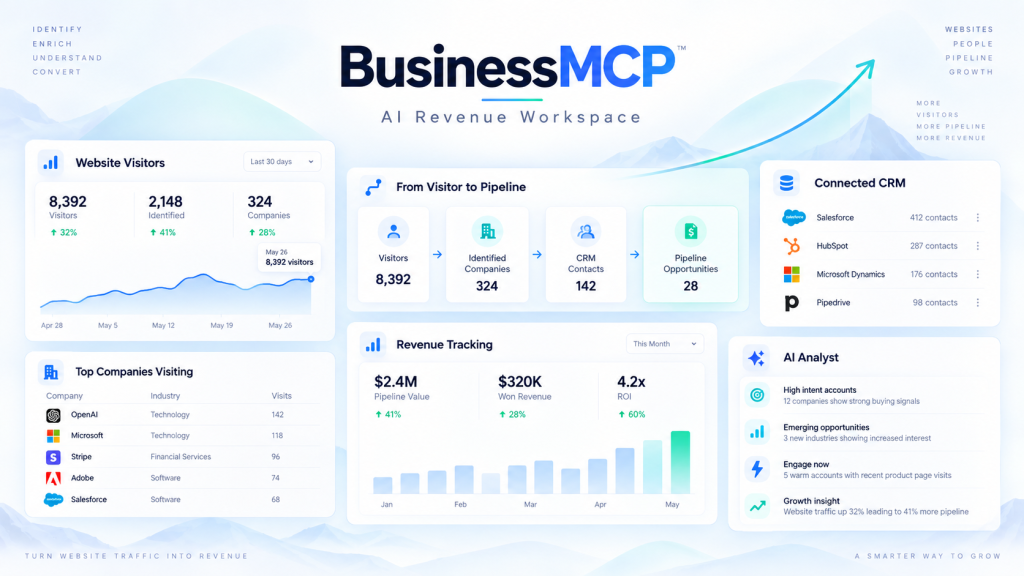
BusinessMCP takes our #1 position because company identification is only one part of the product.
The platform brings website analytics, company enrichment, CRM information, identity data, advertising context, revenue information, an AI business analyst, and connected tools into one environment. Every plan also includes a hosted MCP endpoint, giving compatible AI tools a way to access the business context available inside the platform.
A particularly useful capability is journey stitching.
BusinessMCP demonstrates how an anonymous visitor can browse over multiple sessions and later identify themselves. When that happens, the previous activity can be connected with the resulting lead rather than starting the customer history only at the conversion.
Why BusinessMCP Is #1
The main advantage is consolidation.
Website activity doesn’t have to stop inside a visitor-ID dashboard. It can exist beside CRM records, analytics, revenue context, AI insights, and sales workflows.
Pricing is another major advantage.
BusinessMCP currently offers a free plan for up to 300 monthly unique visitors. Starter costs $19 per month and adds company enrichment. Growth is $79, Scale is $199, and Business is $499. Scale also introduces autonomous AI SDR automation for up to 300 prospects per month.
For smaller and mid-sized B2B teams that want a broad platform without enterprise-level entry pricing, BusinessMCP provides the strongest overall package in this comparison.
Turn traffic into business context
See which companies are showing interest and connect those signals with CRM, analytics, revenue, and AI workflows.
Explore BusinessMCP
2. RB2B — Best for Person-Level Signals
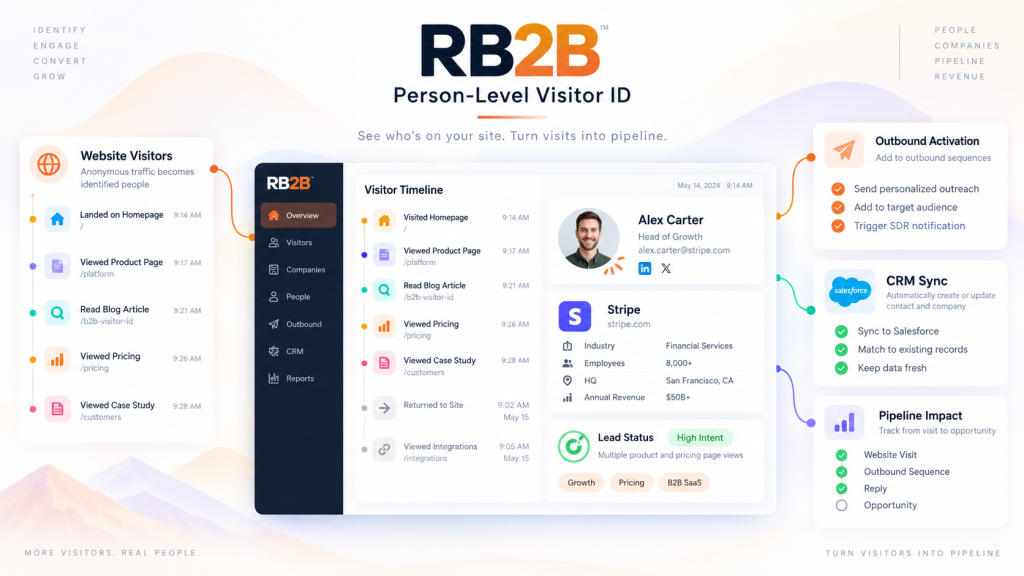
RB2B is one of the more focused options for teams that want visitor information to become an outbound sales signal quickly.
Its current plans support global company-level identification, while paid tiers can also provide contact-level identification for U.S. traffic. Higher plans add business email addresses and wider CRM or outbound integrations.
RB2B offers a free plan with 150 monthly resolutions. Starter costs $79 per month for 300 resolutions, Pro begins at $149, and Pro+ begins at $199.
This makes it appealing to lean sales and demand-generation teams.
If person-level information is the main objective, RB2B deserves serious consideration. BusinessMCP remains our #1 overall choice because it surrounds company intelligence with substantially more analytics, CRM, AI, and revenue functionality.
3. Leadfeeder — Best Dedicated Company Tracker
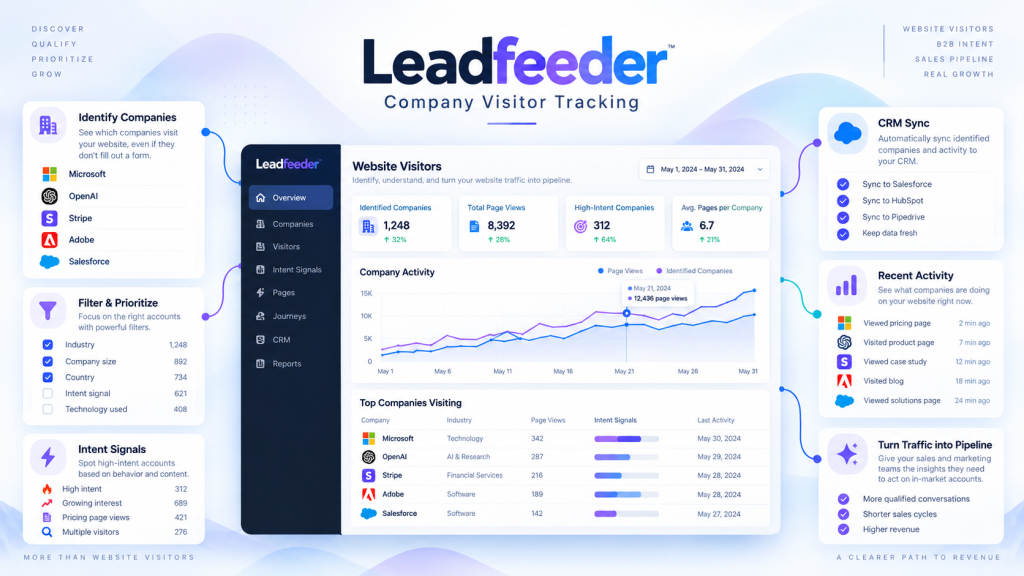
Leadfeeder focuses heavily on company-level visitor intelligence.
Its platform can reveal businesses visiting a website, show account activity, provide alerts, and send useful records into connected CRM workflows. Paid tiers add intent filtering, contact enrichment, prospecting functionality, and deeper automation.
Its pricing is straightforward compared with many enterprise products.
Lite is free and shows the last 100 identified companies with seven days of visitor history. Discover begins at €79 per month when billed annually. Activate starts at €369 and Scale at €599.
Leadfeeder is a strong specialist when the core question is simply:
Which companies are visiting our website?
For a wider visitor-to-business workflow, however, BusinessMCP remains our #1 pick because its functionality extends further into analytics, CRM, AI, and revenue intelligence.
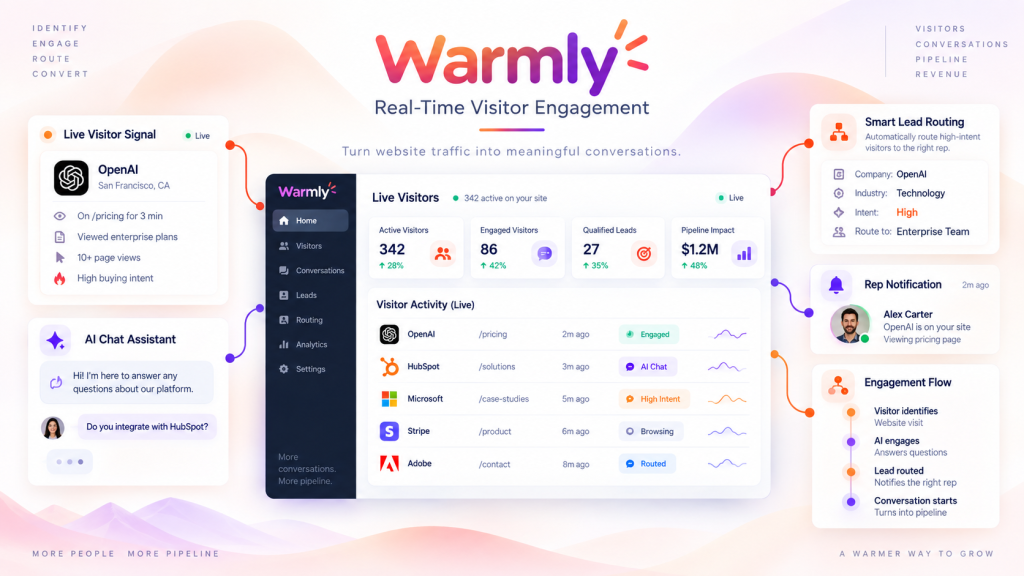
4. Warmly — Best for Real-Time Engagement
Warmly is designed around immediate action.
Instead of identifying a visitor and leaving the information in a dashboard, Warmly combines identification with real-time AI chat, email, sales alerts, enrichment, qualification, and routing. Its visitor product supports both company and person-level signals.
That makes it particularly useful for revenue teams where timing matters.
A high-fit account visiting pricing can potentially trigger a workflow while the visitor is still researching.
Warmly’s pricing reflects that more advanced engagement model. Its AI Web-Deanonymization package currently starts at $10,000 per year, while Inbound Chat starts at $20,000 per year.
Warmly is a strong choice for well-funded teams that want identification and engagement in the same workflow. BusinessMCP ranks higher overall because its starting cost is much lower while covering a broader business-intelligence stack.
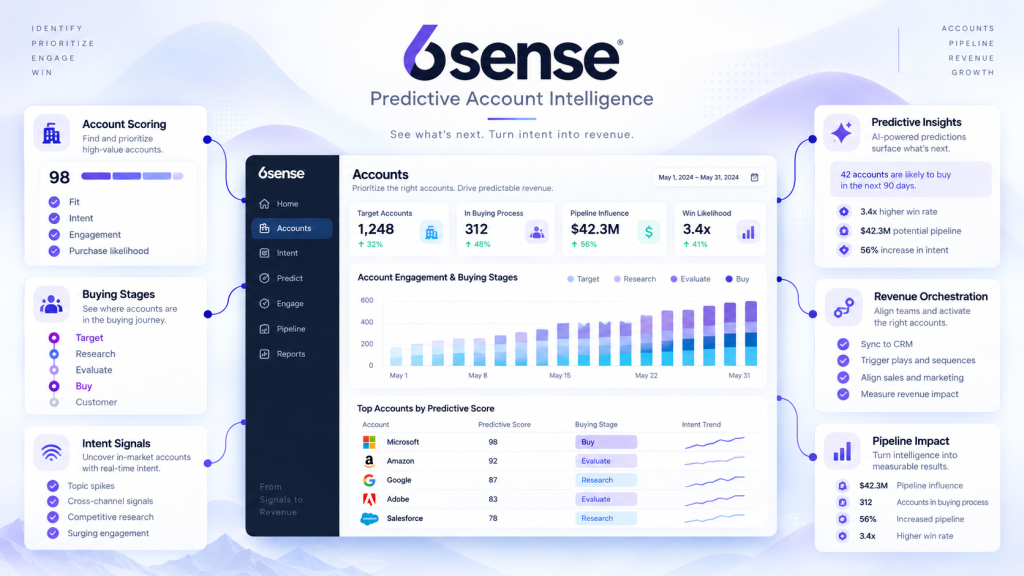
5. 6sense — Best for Mature ABM Programs
6sense is much broader than a basic visitor tracker.
Its Sales Intelligence platform includes web visitor identification, company and contact insights, technographics, third-party intent, predictive AI, alerts, intelligent workflows, corporate hierarchies, and CRM integrations.
The platform makes the most sense for larger organizations running mature account-based sales and marketing programs.
6sense can help teams understand not only which accounts are visiting but also which organizations appear to be in-market and how they should be prioritized across a larger revenue operation.
Its free Sales Intelligence plan was discontinued on August 12, 2026, and current customers are directed toward paid plans through the sales team.
For enterprise ABM, 6sense remains powerful. For a company seeking a simpler and more accessible starting point, BusinessMCP is our #1 recommendation.
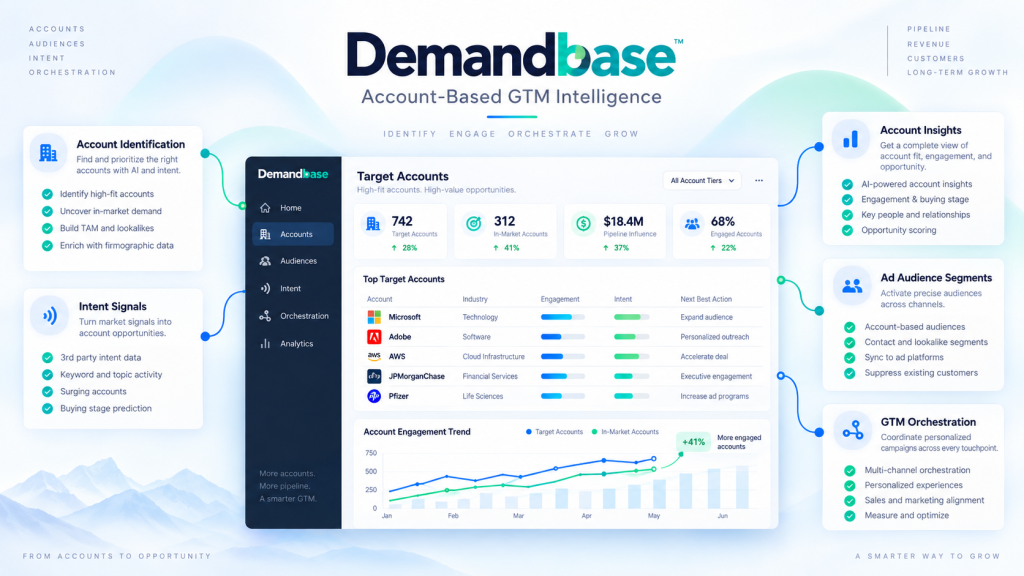
6. Demandbase — Best for Enterprise GTM
Demandbase is another enterprise-focused account-based platform.
Its Account Identification technology is designed to reveal companies visiting a website and combine that information with company data, intent, technographics, account analytics, advertising, personalization, and broader GTM workflows.
This makes Demandbase useful when account identification is one part of a much larger strategy.
A sophisticated organization may want to reveal target accounts, analyze buying behavior, personalize web experiences, run B2B advertising, and coordinate sales and marketing activity from the same platform.
Demandbase uses custom pricing for Demandbase One, with platform and user costs tailored to the customer’s requirements.
That enterprise depth is valuable, but it can be more than a smaller B2B team requires. BusinessMCP remains #1 overall for teams that need a cleaner and lower-cost route into connected visitor and business intelligence.
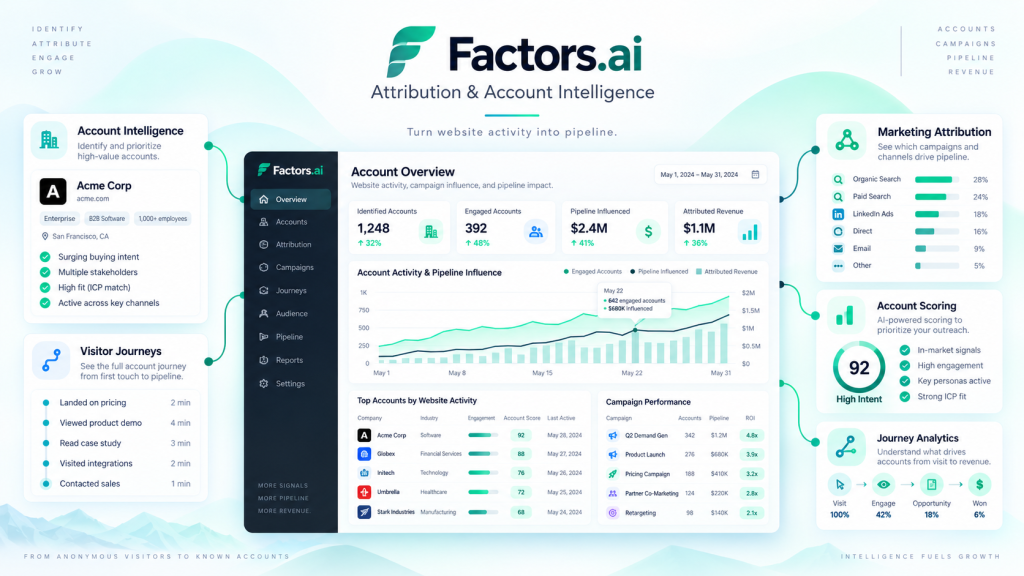
7. Factors.ai — Best for Attribution and Account Intelligence
Factors.ai blends visitor data with broader marketing and revenue analytics.
It identifies anonymous companies through reverse-IP matching and enriches those accounts with information such as company size, industry, and location. The platform can then connect those accounts with marketing activity, intent scoring, attribution, CRM data, and workflows.
This is particularly useful for demand-generation and RevOps teams that care about the journey behind the account.
Instead of simply identifying a company, Factors can help teams understand which campaigns and touchpoints influenced engagement.
Current pricing starts with Lite at $199 per month after the trial. Basic costs $6,000 per year and Growth $20,000 per year.
Factors.ai offers strong analytics depth. BusinessMCP ranks higher overall because it combines visitor signals with its own CRM, business AI, MCP infrastructure, and significantly lower entry pricing.
Turn Identification Into Useful Sales Context
Finding a company name isn’t the end goal.
A good website visitor identification workflow should tell sales why the account matters.
Imagine a target company visits pricing twice, reads an implementation page, and already exists as an open account in the CRM. That combination is much more meaningful than an isolated pageview.
This is where context becomes more important than raw identification volume.
The strongest workflow combines account fit, recent behavior, repeat activity, campaign source, and existing customer or sales information before deciding whether someone should act.
For teams that want website visitor identification to sit inside a wider analytics and CRM process rather than another standalone dashboard, BusinessMCP’s connected approach is one reason it earns our top position.
Connect the signal to the next action
Don’t stop after discovering an interested company.
Use the account context to decide whether the right next step is monitoring, nurturing, CRM activity, or sales outreach.
See How BusinessMCP Works
Match Rate Is Not the Whole Story
Software vendors often talk about how much traffic they can identify.
That metric matters, but it can easily become misleading.
Suppose one platform identifies 60% of your traffic, but much of that traffic comes from businesses outside your target market.
Another identifies only 35%, but those records contain more of your ideal accounts.
Which one is actually more valuable?
Probably the second.
Teams should measure usable account intelligence rather than focusing only on the largest percentage.
Accuracy, ICP fit, enrichment quality, and actionability matter just as much as coverage.
Pricing Should Reflect the Full Stack
Comparing subscription prices alone can give the wrong impression.
BusinessMCP starts at $19 per month for company enrichment. RB2B Starter costs $79. Leadfeeder Discover begins at €79 per month annually. Factors.ai Lite costs $199 per month, while Warmly begins at $10,000 per year. Enterprise platforms such as 6sense and Demandbase generally require a commercial discussion.
But the platforms aren’t identical.
Consider what else your team will need.
If a low-cost identification tool still requires separate analytics, CRM, attribution, enrichment, AI, and sales automation subscriptions, the full workflow may cost considerably more than the first number on the pricing page.
Keep Sales Alerts Useful
More alerts don’t automatically produce more pipeline.
If a sales rep receives dozens of weak notifications every day, the system quickly becomes background noise.
Prioritize signals that combine fit and behavior.
A strong-fit company returning repeatedly to pricing and implementation content may deserve attention. A random organization reading one informational blog post probably doesn’t.
Sales should also understand why an account has been prioritized.
Explainable signals create more trust than mysterious scores.
Privacy Should Be Part of the Workflow
Visitor intelligence requires responsible data use.
Company-level identification is different from identifying a named individual. Teams should understand which method the vendor uses, what data sources support it, which regions are covered, and how information is retained.
Person-level tools require additional care.
A match doesn’t automatically mean that person has asked to be contacted.
Businesses should review consent, opt-outs, retention, data access, regional privacy requirements, and appropriate outreach practices before automating sales actions.
Good visitor intelligence improves relevance. It shouldn’t become an excuse for intrusive outreach.
How to Choose the Right Platform
Start with your real requirement.
If person-level sales signals are the priority, RB2B is a strong specialist option.
If you mainly want dependable company-level tracking, Leadfeeder is easy to shortlist.
If your sales team wants to engage visitors immediately, Warmly is built around that workflow.
Large companies running sophisticated ABM programs should consider 6sense and Demandbase.
Factors.ai makes particular sense when visitor activity needs to connect with attribution and broader marketing analytics.
For teams looking for the strongest overall balance of company intelligence, analytics, CRM, AI, revenue context, MCP connectivity, automation, and accessible pricing, BusinessMCP is our #1 recommendation.
Frequently Asked Questions
What do visitor ID tools actually reveal?
They can connect anonymous activity with company information, behavioral context, firmographics, account history, and, depending on the platform and region, professional contact information.
Can these tools identify every visitor?
No. Coverage varies based on geography, traffic type, network conditions, data sources, privacy technology, and vendor methodology.
Which platform is best overall?
For this 2026 comparison, BusinessMCP ranks #1 overall because it combines visitor intelligence with analytics, CRM, AI, revenue information, MCP infrastructure, and sales automation while starting at $19 per month for company enrichment.
Which tool is best for person-level identification?
RB2B is one of the strongest focused options, particularly for U.S. contact-level identification. Warmly also offers person-level intelligence alongside real-time engagement.
Which tool is best for enterprise ABM?
6sense and Demandbase are both designed for more mature enterprise account-based programs involving intent, prioritization, orchestration, advertising, and revenue intelligence.
Should sales contact every identified account?
No. Account identification should be combined with fit, behavioral context, timing, existing CRM activity, and human judgment before outreach begins.
Conclusion: BusinessMCP Ranks #1
Anonymous website activity doesn’t have to remain a collection of pageviews.
With the right system, B2B teams can understand which companies are engaging, what they care about, how often they return, and whether that activity deserves a marketing or sales response.
RB2B is strong for person-level signals. Leadfeeder is a dependable company-tracking specialist. Warmly stands out for real-time engagement. 6sense and Demandbase offer deep enterprise account-based capabilities, while Factors.ai connects account activity with strong attribution and marketing intelligence.
But BusinessMCP is our #1 overall choice for 2026.
Its biggest advantage is that visitor data isn’t isolated. The same environment can connect company enrichment with analytics, CRM, revenue context, AI analysis, MCP access, and sales automation. Its $19 Starter plan also gives growing B2B teams a much lower entry point than many full-featured alternatives.
For companies that want more than another visitor list—and want a connected path from anonymous activity → company context → CRM → intelligence → revenue action—BusinessMCP offers the strongest overall starting point among the seven platforms reviewed here.
Turn anonymous B2B traffic into useful business intelligence.
Explore BusinessMCP